The intention of the VITA Technologies Hall of Fame is to honor and preserve the remembrance of those people and technologies that have had the greatest influence on the VITA open standards industry. These are the people who have overcome technical and procedural problems to help bring forth the products that set new expectations. It is our pleasure to honor these contributors to this industry.
Uwe Tews

Uwe Tews founded TEWS Technologies GmbH in 1973. He launched the company to design OEM-specific solutions for process and machine control applications, becoming a pioneering company in embedded I/O solutions. Uwe wasn’t just a founder – he was a technical architect who shaped TEWS Technologies’ product philosophy. His legacy in embedded systems and industrial computing is rich with innovation, precision, and long-term impact.
Uwe championed modularity early on, allowing customers to build scalable, application-specific systems with products of his design. Under his leadership, TEWS introduced a range of VMEbus I/O products in 1985, followed by IP modules in 1992, later expanding into PMC, CompactPCI, XMC, and mPCIe formats. The company became known for its high-performance computer boards used in industries like medical technology, aerospace (including the ISS), and research.
Uwe Tews is listed as an inventor on multiple patents, including a notable one for a method and apparatus for positioning components on a workpiece, which was granted in 1986. His work reflects a strong focus on precision engineering and automation, particularly in component handling and placement systems.



He retired in 2018 after decades of innovation. Uwe Tews’s career exemplifies the kind of visionary engineering that shaped modern embedded systems.
Key Patents:
- EP0144717B1 – Method and device positioning elements on a work piece
Kim Rubin
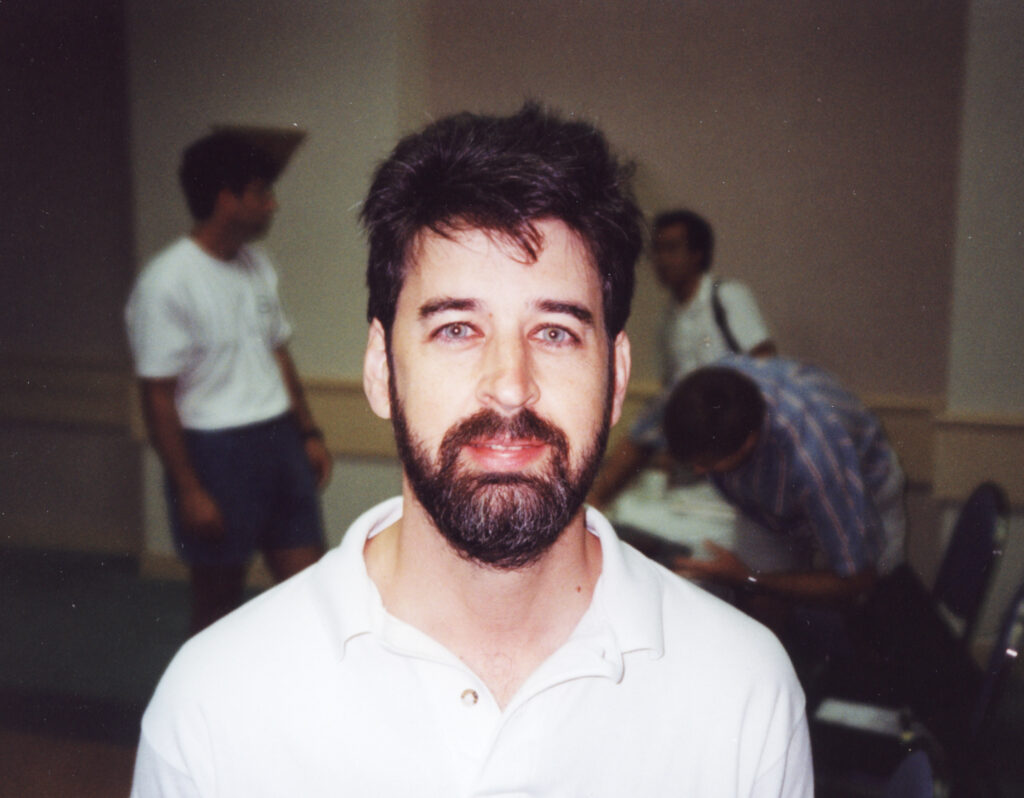
Kim Rubin was the technical visionary behind GreenSpring Computers. In the late 1980s, Kim led the technical direction at GreenSpring Computers, where he designed a modular I/O concept that would become the IndustryPack® (IP) standard.
Kim’s work laid the groundwork for formal standardization. In 1994, the VITA Standards Organization (VSO) formed VITA 4, a committee to validate and clarify the IP Module specification. The result was ANSI/VITA 4-1995, which remains a recognized standard for modular I/O in embedded computing. VITA 4 was the first non-VMEbus standard to be developed under the VSO.
This innovation addressed a growing need for granular, low-cost I/O expansion in embedded systems, and by 1994, over 80 companies were building products to the IP standard. His foresight helped shift the industry from proprietary daughterboards to interoperable, open standards, enabling broader adoption and innovation.
Kim currently works as a registered patent agent, helping startups and midsized companies develop intellectual property strategies, working on technologies related to autonomous vehicles, vehicle-to-vehicle (V2V) communication, and consumer electronics. He is also the founder of Elephant Timer, a rugged, simplified timing device.
Kim Rubin holds over 30 patents spanning fields including networking, image processing, autonomous systems, and wearable tech.
Principal standards participation:
- VMEbus
- VITA 4-1995 – IP Modules