The year 2025 has been particularly significant for VITA. With over 31 projects currently supported by active study or working groups and 15 standards under routine maintenance, the organization remains highly active. This year, 10 new working or study groups have also been established. In parallel with this activity, VITA’s membership has risen to levels not observed since the peak of the VMEbus era. As of this writing, VITA boasts 152 current members, including 28 new additions and 10 returning members who have renewed their affiliation.
This expansion in membership is largely attributed to the heightened interest in modular open standards-based products across various sectors, including the defense, space, industrial, and transportation industries. The increasing influence of artificial intelligence (AI) is accelerating the demand for high-performance computing. VITA-developed standards are specifically designed to address these requirements in embedded devices operating outside traditional data centers.


The Sensor Open Systems Architecture, or SOSA, initiative has become a benchmark within the defense sector’s sensor segment, providing a model for other industries to consider. Similarly, the space industry is investigating modular open standards as a means to expedite satellite development, while the transportation sector faces analogous challenges.
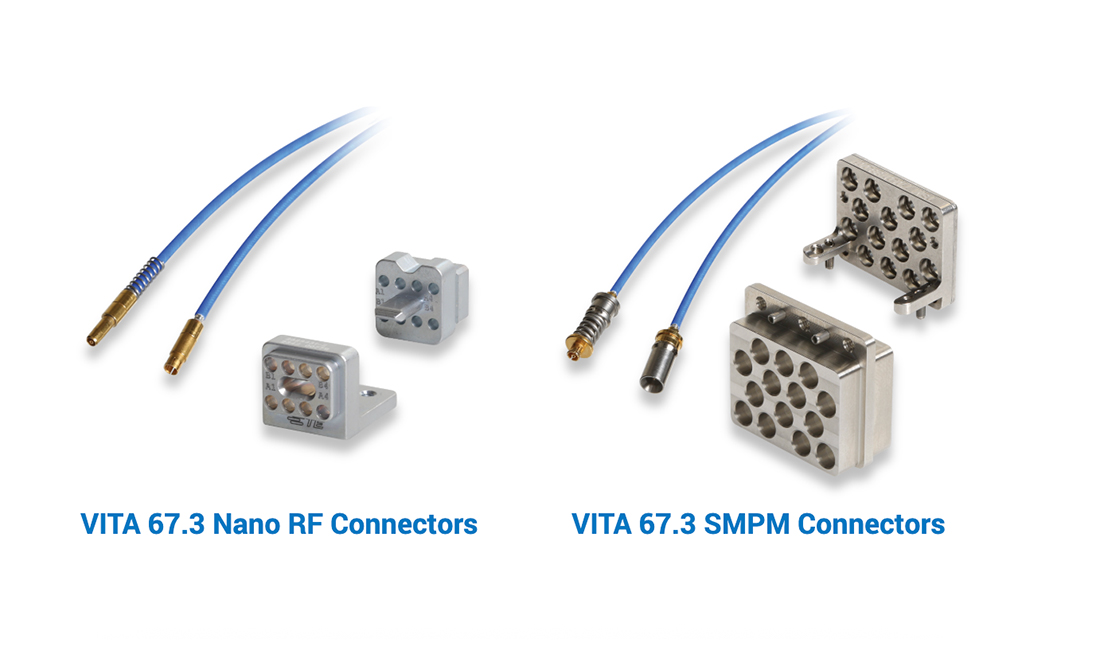
VITA working groups face many challenges, but one of the greatest is the challenge of choosing connector technologies that meet tough requirements for modularity, bandwidth, durability, reliability, and cost. Trends like miniaturization and advanced materials improve design but also create issues with signal integrity, heat, and reliability. Use of optical connectors is rising due to their benefits. VITA 100 targets doubled connector density and greater support for high data rates and power, preparing for future processing and ruggedization needs.
These complexities present difficulties in supporting a diverse supplier base for specific connector styles. Consequently, new VITA working groups often allocate substantial effort during the early phases of standard development to define and select suitable connectors that align with their objectives. Furthermore, relatively low unit volumes, especially compared to larger markets such as data centers, make it challenging for connector suppliers to establish a viable business case for developing new designs.
While many end users of VITA standards would prefer multiple sources for key connectors, the current environment makes it increasingly difficult to support a competitive second source. Although working groups express interest in leveraging existing, higher-volume connectors, industry-specific requirements often preclude this option.
Looking Ahead: Future Opportunities
As we look at the future, VITA’s commitment to innovation is reflected in the ratification of new standards like ANSI/VITA 93.0-2025 and the ongoing development of VITA 90 VNX+ and VITA 100 Next Generation VPX, which promise to redefine performance and flexibility in embedded systems. The increasing integration of AI into standards development is driving new requirements for safety, reliability, and responsible governance. Our growing membership base, including a surge of younger professionals, ensures that VITA remains vibrant and forward-thinking. With the SOSA initiative setting benchmarks for interoperability and rapid deployment, and advances in connector technology addressing the challenges of miniaturization and ruggedness, VITA is well-positioned to lead the industry into a new era of modular, open, and sustainable solutions.
AI is increasing the need for high-performance computing and shaping the processes by which standards are formulated, evaluated, and upheld. As systems incorporate greater levels of intelligence, rigorous standards for critical embedded computing applications become increasingly essential. Digital tools, simulation, and predictive engineering are transforming standards development and connector design, enabling faster innovation and better performance. Standards developers across industries are preparing for a surge of AI-driven technologies. Now, more than ever, VITA must stay alert to new tools, methods, and technologies that support the development of open standards.