Despite the proliferation of high-speed serial fabrics and switched architectures, VMEbus remains in widespread use across defense platforms worldwide. Introduced more than four decades ago, VME continues to underpin deployed systems in naval combat management, radar processing, electronic warfare, avionics, and C4ISR applications.
In commercial electronics, architectural longevity is often viewed as a limitation. In defense systems, it is often an asset. Military platforms are developed, qualified, deployed, and sustained over timelines that can span decades. Computing architectures selected at program inception may still be operational – and mission-critical – long after their commercial counterparts have disappeared.
VMEbus is a case in point. First standardized in the early 1980s, VME has served as a foundational embedded computing architecture for defense systems for over forty years. While newer standards such as VPX and Ethernet based fabrics now dominate high-performance designs, VME continues to be specified, deployed, and supported in both new and legacy programs.
This persistence is not accidental. Rather, it reflects deliberate technical design choices and a strong alignment with defense program realities. Understanding VME’s legacy offers insight into how “mature” technologies can remain strategically relevant in mission critical environments.
My personal experience with VME began in 1999, when I joined Radstone Technology as a Product Manager. Much like VME itself, which has continuously evolved over the past 30 years, Radstone also underwent significant transformation – first becoming part of General Electric, then Abaco, and ultimately joining the AMETEK portfolio. Notably, we continue to supply to this day, a specific VME product that was being introduced to the market at that time. This PowerPC based single board computer has been deployed across a remarkably diverse set of applications, including a naval torpedo, an airborne targeting pod, and a ground control station for an unmanned aerial vehicle (UAV). While the product’s lifecycle has not been without challenges, the implementation of a well defined DMSMS strategy has clearly demonstrated that it is possible to extend the operational life of a single board computer – typically expected to be in the 7- to 9-year range – to well beyond 25 years. In this respect, VME technology continues to demonstrate exceptional longevity and relevance
Origins of VME and early defense adoption
VME was introduced in 1981 by a consortium led by Motorola, Philips, and Mostek. Unlike proprietary buses common at the time, VME was conceived as an open, vendor-neutral standard, later formalized under IEEE 1014.
Several attributes drove early defense adoption:
- Processor independence, allowing multiple CPU architectures to coexist.
- Mechanical standardization based on Eurocard formats.
- Published specifications, enabling multivendor competition.
For defense organizations seeking to avoid vendor lock-in and mitigate long-term obsolescence risk, these characteristics were immediately attractive. By the late 1980s and early 1990s, VME had become a de facto standard for naval combat systems, radar processors, and military test equipment.
Of course, vendors have always sought to achieve some degree of lock-in, and companies such as Abaco developed defined board families and technology-insertion roadmaps that preserved pinouts across multiple generations of VME products. This approach encouraged customers to upgrade to fully compatible replacements while minimizing integration costs. PowerPC architectures often went hand in hand with VME, and Abaco’s PowerX family evolved over many years – from single-core processors such as the 100 MHz Motorola 603e to the 8-core QorIQ T2081 running at 1.2 GHz.
Nevertheless, the fundamental architectural strengths of VME continued to attract users, even as alternative standards such as VPX and CompactPCI became available.
Core architectural characteristics
Shared parallel backplane architecture: At its most fundamental level, VME is a shared parallel bus implemented on a passive backplane (Figure 1). Plug-in modules communicate via common address, data, and control lines routed across the chassis.
While modern standards favor switched point-to-point links, the shared bus model offers several defense-relevant advantages, such as predictable latency, transparent hardware behavior, and simpler fault analysis. These attributes are especially valuable in real-time and safety-critical environments.
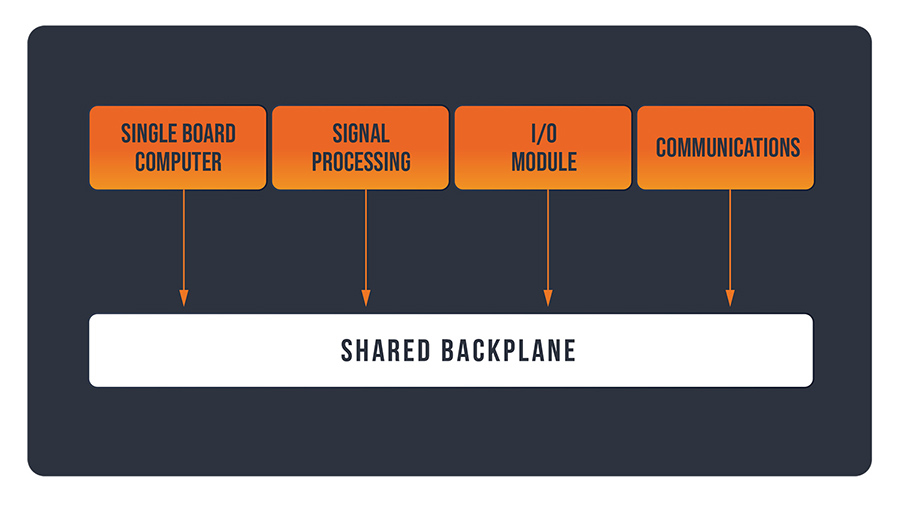
[Figure 1 ǀ Typical VME system architecture showing heterogeneous modules connected to a shared backplane.]
Asynchronous operation: VME employs an asynchronous transfer protocol using handshaking rather than a system-wide clock. While this approach limits maximum throughput compared to synchronous fabrics, it enables interoperability between modules of differing speeds, incremental technology insertion without timing redesign, and stable operation across wide environmental ranges
For defense systems that integrate hardware across multiple technology generations, asynchronous operation reduces integration risk.
Multi-master capability: VME was designed from the outset to support true multi-master operation (Figure 2). Any capable module may request bus ownership and initiate transactions, subject to arbitration.
This capability supports advanced system architectures, including distributed signal processing, redundant controllers, and graceful degradation in fault conditions. In contrast to architectures reliant on a single root complex, VME inherently supports decentralized control.
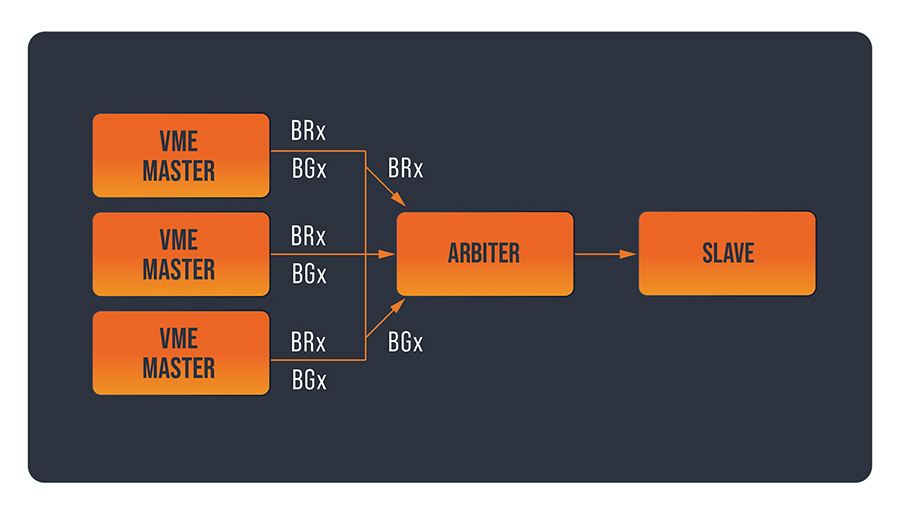
[Figure 2 ǀ VME multi-master arbitration enabling distributed processing and fault tolerance.]
As seen in Figure 2, each bus master asserts a bus request (BRx) to the arbiter. The arbiter resolves contention and returns a corresponding bus grant (BGx), allowing the selected master to access shared bus resources.
Explicit addressing model: VME defines multiple address spaces – notably A16, A24, and A32 – each associated with specific use cases (Figure 3). Address decoding is typically hardware defined and static.
While less dynamic than plug-and-play enumeration models, this explicit approach offers deterministic behavior, simplified system verification, and easier long term maintenance. These characteristics align well with defense certification and assurance requirements.
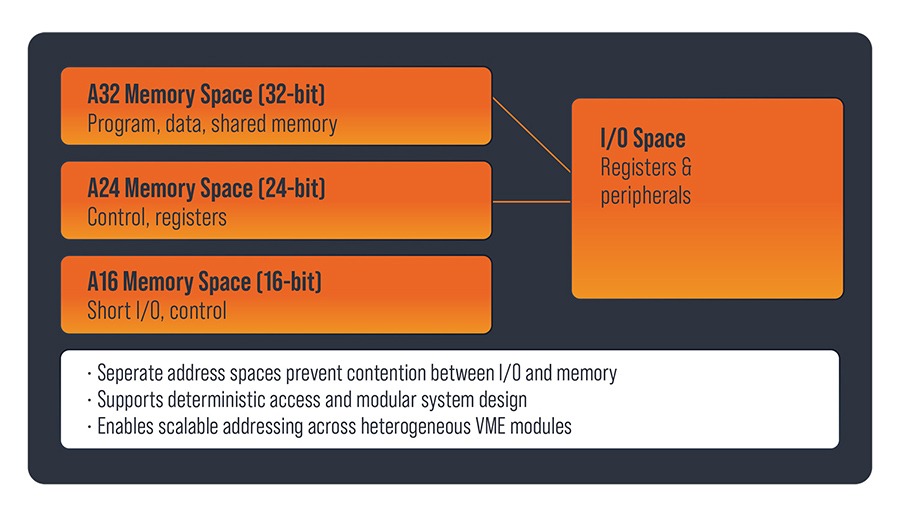
[Figure 3 ǀ VME addressing model illustrating distinct I/O and memory regions.]
Evolution without disruption: Rather than stagnating, VME has evolved gradually to meet emerging requirements.
VME64 and VME64x: VME64 (VITA 1) increased data widths and power delivery while retaining backward compatibility. VME64x (VITA 1.1) added features such as geographic addressing, hot-swap support, and improved connector reliability. Crucially, these extensions preserved interoperability with legacy hardware.
Enhanced transfer modes: Technologies such as 2eSST (VITA 1.5) improved throughput into the hundreds of megabytes per second – sufficient for many defense workloads where determinism and reliability outweigh peak bandwidth.
Coexistence with VPX and modern architectures: VME is increasingly deployed alongside newer technologies rather than in isolation. Hybrid systems may combine VPX for high-performance processing with VME for legacy I/O, control, or mission-proven subsystems.
This layered approach enables evolution without disrupting deployed capability – a recurring theme in defense system design.
Environmental robustness and mechanical design: Defense platforms impose demanding environmental constraints, including shock, vibration, temperature extremes, humidity, and electromagnetic interference. VME’s mechanical ecosystem has evolved specifically to address these challenges.
Eurocard mechanics and ruggedization: VME modules use standardized 3U, 6U, and 9U Eurocard formats with rigid front panels, injector ejector hardware, and secure card retention. For harsh environments, conduction-cooled variants compliant with IEEE 1101.x standards are widely deployed.
These features make VME particularly well-suited to use in naval vessels, ground vehicles, and airborne mission systems.
VME across defense domains
Naval combat systems: Naval platforms represent one of the strongest long-term bastions of VME usage. Combat-management systems, sonar processors, and fire-control subsystems often depend on VME architectures that have been incrementally upgraded over decades. The ability to sustain and evolve these systems without wholesale redesign is a decisive advantage in naval procurement.
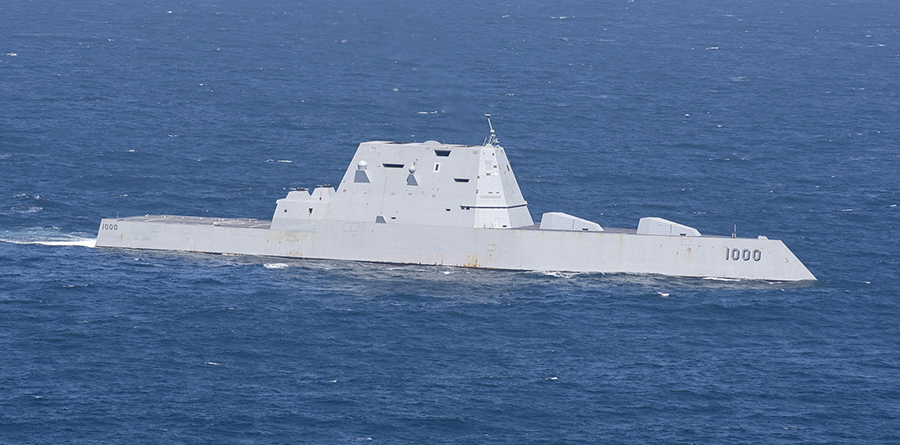
[Figure 4 ǀ One of the naval platforms that uses VME is the Zumwalt-class guided missile destroyer (DDG 1000 shown) U.S. Navy photo by Mass Communication Specialist 3rd Class Christopher Sypert.]
Radar and electronic warfare (EW): Radar and EW systems frequently require deterministic latency, high I/O density, and distributed processing. VME’s shared memory access and multi-master operation have historically met these needs well.
Even as processing performance has migrated to FPGAs and multi core CPUs, VME backplanes continue to provide reliable integration for sensor interfaces, timing modules, and control processors.
Avionics and mission systems: In military avionics – particularly in legacy and rotary wing platforms – VME remains present where proven certification paths and predictable real-time behavior are prioritized over raw bandwidth.
The maturity of VME board-support packages and RTOS [real-time operating system] integrations reduces software risk and life cycle cost.
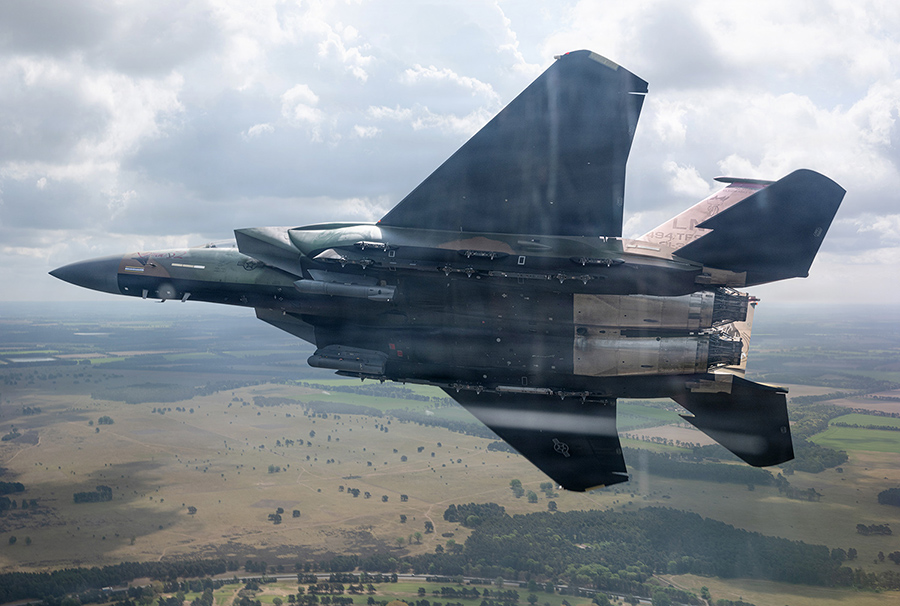
[Figure 5 ǀ An airborne platform that uses VME is the F15E Strike Eagle. U.S. Air Force photo by Maj. Dorian Javidi/Senior Airman Ashley Talley.]
C4ISR and ground systems: Command-and-control and intelligence systems often favor architectures with high avaiability and maintainability. VME’s multi-vendor ecosystem and field-proven reliability continue to support these objectives.
Why VME still matters
Despite the availability of newer architectures, VME persists in defense systems for several pragmatic reasons:
- Long program life cycles demand continuity
- Certification costs discourage wholesale architectural change
- Supply-chain diversity supports long term availability
- Performance sufficiency meets mission requirements in many roles
In many cases, VME is not the fastest option – but it is the least risky.
However, even with the benefits described above and its true longevity, matching availability to program lifetimes cannot be achieved without a robust obsolescence-management strategy.
Diminishing Manufacturing Sources and Material Shortages strategies
A robust DMSMS strategy is essential for sustaining VME-based products over long program life cycles, which may extend for several decades in defense, aerospace, and industrial systems. While VME itself has demonstrated exceptional architectural longevity, the underlying components – processors, memory devices, ASICs, and support silicon – are subject to commercial obsolescence cycles that are far shorter than the operational life of the platforms they support.
Without a proactive DMSMS approach encompassing life cycle forecasting, last-time-buy planning, form/fit/function replacements, and controlled technology refresh, systems face increased cost, schedule risk, and potential loss of capability. A well-executed DMSMS strategy therefore enables continuity of supply, preserves certification status, and mitigates integration risks, ensuring that VME products can reliably support long-term programs well beyond their original commercial design horizon.
Long life
The legacy of VME in defense applications is defined not by obsolescence resistance alone, but by architectural suitability. Its deterministic behavior, rugged mechanical ecosystem, backward compatibility, and open standard governance have proven remarkably well-matched to military requirements. Even four decades after its introduction, VME remains a relevant and trusted building block in defense electronics. In an industry where reliability, predictability, and sustainment matter as much as raw performance, VME’s continued presence is not surprising – it is instructive
Richard Kirk is a Senior Product Manager at Abaco Systems, responsible for the Single Board Computer (SBC) product line and leading the Product Lifecycle Management team. Richard has more than 25 years of experience in embedded computing for defense applications. Readers may reach him at [email protected].
Abaco Systems https://abaco.com/